If you attended HIMSS 2026 or followed along from a distance, you probably noticed a common thread running through nearly every conversation: healthcare is getting smarter about how it operates. AI, automation, and digital transformation represent a meaningful shift in how organizations are thinking about efficiency and care quality.
But with these solutions comes the admission that many healthcare organizations are wrestling with something much more fundamental—patient intake.
Why Intake Kept Coming Up at HIMSS 2026
Every phone call your team answers, every message they record, and every symptom a patient describes will influence the actions that follow. When that information is accurate and complete, providers can make confident decisions more quickly. When it’s not, workflows can stall.
Think about what’s actually at stake during those initial interactions:
- How clearly will a provider understand a patient’s concern?
- Is care coordination delivered correctly?
- Does the EHR reflect what actually occurred?
- How positive is the patient experience?
Providers know that when information coming in is incomplete or inconsistent, everything else becomes harder to get right.
Where Things Break Down (and Why It’s Not a People Problem)
Even in well-managed call centers with experienced staff, intake workflows regularly rely on a mix of memory, habit, and free-text notes, which can lead to gaps in patient data.
Some of the most common breakdowns look like this:
- A patient forgets to mention a key symptom, and no one prompts them for additional details.
- Notes are written in different ways by different staff members, making them hard to interpret.
- Information gets manually re-entered into the EHR, introducing errors along the way.
- Providers receive unclear messages and have to follow up before they can act.
These aren’t signs of a bad team, but rather a workflow that wasn’t designed to support consistency at scale. When your staff is managing high call volumes under pressure, even the most careful person will occasionally miss something. Yet when that happens, it carries real risk—delayed care, missed urgency, and poor health outcomes.
Why Traditional Answering Services Don’t Solve This
Many healthcare organizations rely on medical answering services to manage call volume, and they do serve a purpose. But these are primarily built to relay messages, not structure them clinically.
There’s no guided process for capturing symptoms, workflows aren’t designed for different patient scenarios, and there is no built-in clinical context to help identify red flags. This setup creates intake messages that may capture what patients said, but not necessarily what the provider needs to know.
Getting doctors the information they need depends on a clinically governed intake system built on predefined medical guidelines that can create relevant, complete, and safe information capture.
What It Actually Takes to Improve Patient Intake Workflows in Healthcare Call Centers
Better intake isn’t about hiring and training more people or working faster. Intake needs a system that reliably captures the right information during every single patient encounter, regardless of who answers the phone.
The most effective intake workflows tend to share four qualities:
- Structured, Guided Prompts. Rather than relying on open-ended conversations, guided intake uses consistent prompts to address the information that actually matters. Symptom-specific questions, standardized formats, and built-in checks for completeness make sure that nothing important gets overlooked.
- Clinical Context Integrated Into the Process. Good intake organizes patient data so providers can act, surfacing relevant symptoms, flagging potential urgency, and presenting information in a format that expedites and simplifies clinical review.
- Automation That Supports People, Not Replaces Them. Automation works best when it enhances human decision-making, not bypasses it. In the context of patient intake, this involves intelligent tools built on evidence-based logic and physician-designed workflows that can improve message consistency and preserve clinical thinking.
- Smooth Integration With Provider Workflows. Healthcare call centers may struggle with the gap created between what intake staff capture and what providers actually receive. Improved workflows close that gap by delivering structured, EHR-ready documentation that decreases manual transcription.
The Domino Effect of Getting Intake Right
When intake works as it should, advantages spread from the call center throughout the entire organization.
Teams handle calls more efficiently, document more consistently, and spend less time with follow-ups. Providers receive clear, structured information to make decisions. Patients get faster responses and more appropriate dispositions.
That’s a better system from start to finish.
Where MedMessage Automate™ Fits In
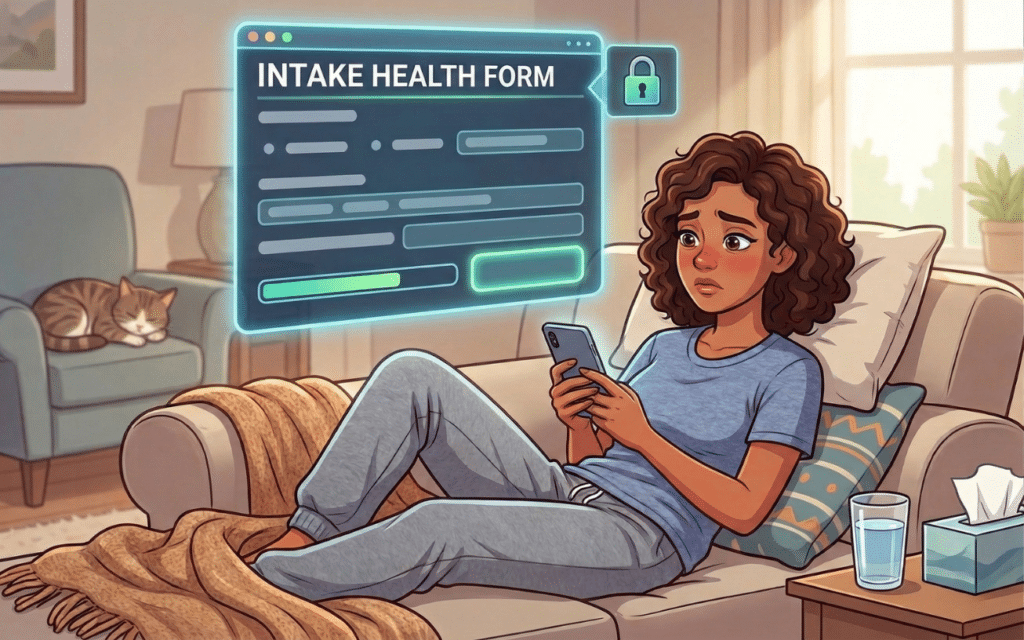
MedMessage Automate was created to address these challenges. Rather than functioning as a traditional answering service, it focuses on structured, automated patient intake that captures complete information from the very first interaction.
Key capabilities include dynamic intake forms designed with physician logic, over 99% accuracy in capturing patient requests, and direct delivery of structured information to providers.
It’s the kind of solution that reflects what modern healthcare is pointing toward: using technology to genuinely improve workflows, not just put a digital layer on top of old ones.
How to Create Better Health Outcomes
Intake is the starting point for every care decision, and a meaningful driver of both safety and efficiency. Improving it means fewer gaps, less friction, and a more reliable path from patient request to provider action.
That kind of consistency doesn’t just boost operations; it also promotes patient engagement and creates better health outcomes. Contact us today if you’d like to learn how MedMessage Automate supports that mission, and what it could do for your call center intake.
About TriageLogic
TriageLogic is a URAC-accredited, physician-led provider of top-quality nurse telehealth technology, remote patient monitoring, and medical call center solutions. Founded in 2006, the TriageLogic Group now serves more than 22,000 physicians and covers over 42.5 million lives nationwide.