AI Psychiatric Triage Raises Concerns
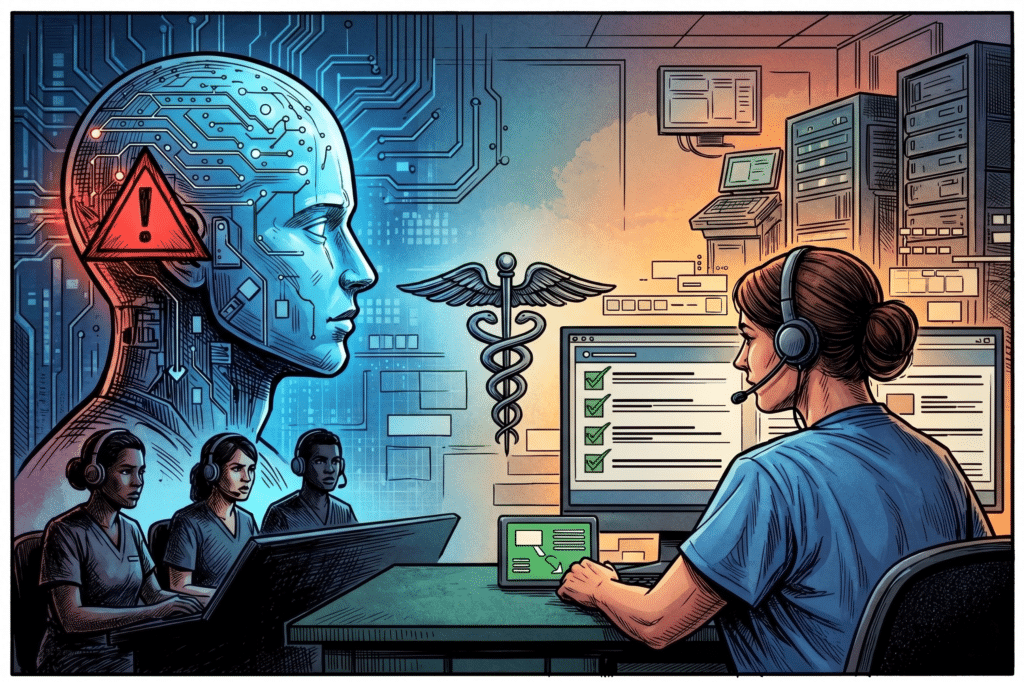
A recent report highlights concerns about the application of AI to address the psychiatric needs of patient callers, and that these workflows may have delayed care and improperly prioritized requests.
While we’ve seen how AI tools can ease workloads in health care—particularly in nurse triage—we also understand that there is an important balance between software solutions that make administrative tasks easier and the registered clinicians who should still be in charge of making care decisions.
In our area of expertise, structured nurse triage still requires oversight by licensed professionals—including those in medical call centers.
The Real Risk in Nurse Triage: Unstructured Workflows
Triage is about making the right clinical decision at the right time. When call centers rely on workflows that vary—whether due to staff experience, training, or available solutions—this introduces risk by creating inconsistencies in how symptoms are assessed, documented, and escalated. Challenges are often magnified in environments with high call volumes, after-hours coverage gaps, or frequent staff turnover.
AI plays an important role in modern healthcare operations, especially in streamlining intake and reducing administrative burden. However, nurse triage requires a level of clinical judgment that extends beyond pattern recognition. Without structured clinical frameworks, AI-driven tools may struggle to interpret nuanced patient responses or identify subtle warning signs that prompt escalation.
Triage is more than routing calls; it’s evaluating patient symptoms and sharing that information with providers. Nurses combine their knowledge with triage software to maintain a consistent, clinically sound process.
What Structured Nurse Triage Standardizes
Structured nurse triage standardizes every patient request by having certified RNs apply medical knowledge, listening skills, and evidence-based protocols. In practice, this includes:
- Step-by-step clinical decision support
- Clarifying questions for complete symptom capture
- Full documentation of all patient interactions
- Data-sharing with providers through seamless EHR integration
This approach—combining clinical expertise with structured symptom assessments—reduces the variability and risk that AI alone cannot prevent across teams and shifts, leading to consistent, defensible decisions.
For call center managers, nurse-led triage remains the most reliable standard for patient support and better health outcomes.
How AI Can Complement the Triage Process
In addition to managing manual tasks, we’ve also seen how valuable AI can be as a training simulator. Our Triage Assist program uses it to create a wide variety of patient scenarios that nurses may encounter, from handling agitated callers to overcoming background noise to discerning patient needs when language barriers are present.
The goal is to familiarize nurses with our phone-based triage process so they are confident and prepared before live patient calls.
Operational Impact for Call Center Managers
Nurse triage offers accurate documentation and greater accountability to call center managers. Because workflows are standardized and every team member follows the same process, training new staff is easier and faster, and experienced nurses gain confidence in handling complex cases.
Call centers can scale without losing quality, thanks to a repeatable model across teams, locations, and shifts.
The Right Role for AI in Modern Triage Workflows
Recent scrutiny of AI solutions shows that the technology is most effective when it supports—not replaces—clinical workflows.
AI may improve efficiency in medical intake, data organization, and patient routing, but clinical decision-making still depends on structured protocols and human oversight. This ensures organizations make gains through innovation while maintaining care standards.
What to Evaluate When Comparing Triage Solutions
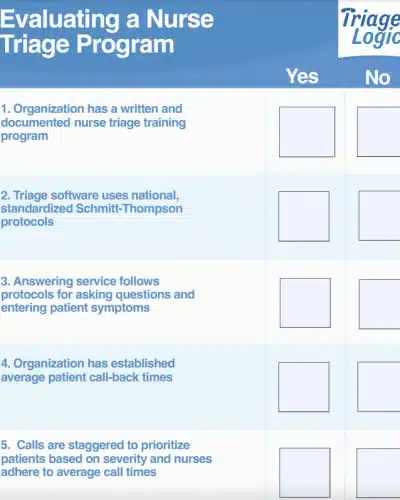
We think it’s important that any new technology balances innovation with accountability. If you’re looking for solutions in the realm of nurse triage, the following considerations can guide that process:
- Does your call center utilize certified nurses?
- Are clinical protocols evidence-based and consistently applied?
- Does your triage software produce documentation that integrates with your EHR?
- Can your established workflows scale across teams and shifts?
- Do your nurses have clear guidance for escalation and follow-up care?
By addressing these questions, you can select patient-facing solutions that support long-term performance, improved health outcomes, and reduced liability. If you would like to see examples of triage solutions, you can schedule a demo to explore how these may fit your workflow.
About TriageLogic
TriageLogic is a URAC-accredited, physician-led provider of top-quality nurse telehealth technology, remote patient monitoring, and medical call center solutions. Founded in 2006, the TriageLogic Group now serves more than 22,000 physicians and covers over 42.5 million lives nationwide.