
Nurse Triage Programs: The 2026 Evolution of the Industry Standard
We’ve all seen it. A call volume report that doesn’t match the staff you actually have on hand. Balancing patient needs against limited resources is a daily problem for clinical call center leaders.
Years ago, TriageLogic built the first full nurse triage audit framework. It became the industry standard. Now healthcare is changing fast, and TriageLogic is leading again. We’re defining the 2026 standard for nurse triage programs.
Here’s what we’ll cover. Why the original Core 9 audit points still matter. The shifts shaping clinical call centers. And why staying ahead protects your program and your patients.
The Foundation: The Original Core 9 Audit Points
These nine points have guided nurse triage programs for years. They come from broad industry experience and proven best practices. Together they form the base for safe, efficient, and compliant triage.
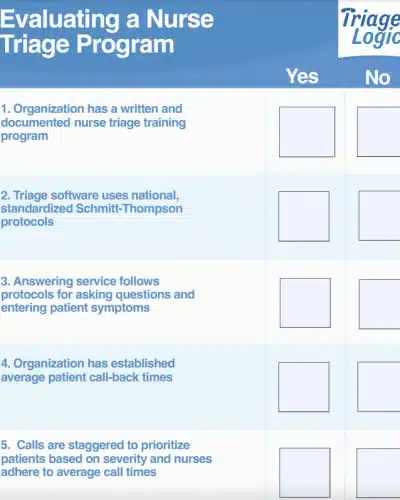
Want to start or improve your program? A full checklist of these Core 9 points is ready to download here.
1. Clinical Training and Nurse Qualifications
The first checklist item makes sure your triage nurses have the right training and verified credentials. It rests on clear clinical standards and licensing rules. The goal is simple. Nurses should be able to make safe, accurate decisions every time.
Keys to verify: Well-trained nurses are the heart of a good program. Check nurse certifications and ongoing education. Follow licensing rules like those URAC requires. Keep training current so it reflects the latest clinical guidelines.
2. Schmitt-Thompson Protocol Adherence
Schmitt-Thompson protocol adherence isn’t something that would be nice, it’s a must…every time. These are trusted, evidence-based guidelines for phone triage. They keep patients safe and advice consistent.
Keys to verify: Following protocols reduces guesswork and protects patients. Audit calls to confirm nurses use them. Watch for any slips. Use AI tools like MedMessage Automate to flag breaks fast. URAC accreditation also proves you stay on track.
3. Protocol Entry and Documentation Standards
This point covers how well each call is recorded. It includes call recordings and logged details. The aim is clear, honest medical records.
Keys to verify: Good records protect you legally and keep you accountable. Use one consistent process for every call. Store records in secure, SOC 2-certified systems. Review them often to catch gaps early.
4. Call-Back Time Compliance
This item measures how fast your Nurse Triage team follows up with patients. Urgent cases need a clinic call back within safe, set windows.
Keys to verify: Quick call-backs lower patient risk and legal exposure. Track call-back times on a live dashboard. Offer 24/7 nursing coverage. Stick to your set time windows and report on them often.
5. Severity Prioritization Accuracy
This point reviews how well nurses rank each patient by urgency. Cases get sorted by true clinical need.
Keys to verify: Good ranking prevents dangerous delays and wastes fewer resources. Audit how nurses score cases. Use AI tools like MedMessage Automate to support them. Review often, in line with URAC guidelines.
6. QA Recording and Review Processes
Quality assurance keeps your triage standards high. You record calls, review them, and fix what’s weak. This is how programs improve over time.
Keys to verify: Run regular audits and have experts review call recordings. Give nurses clear feedback. Use SOC 2-compliant recording tools. Build a culture where QA is normal, not a threat. TriageLogic is rolling out a process that audits over 90% of standard calls automatically.
7. Secure Texting and Communication Protocols
This checklist item covers how you share patient information. Every channel between nurses, providers, and patients should be encrypted and secure.
Keys to verify: Protecting patient privacy means following HIPAA. Use SOC 2-certified, encrypted messaging. Run security checks often. Train staff on safe communication so trust stays strong.
8. URAC Accreditation Standards
URAC accreditation is an outside stamp of quality. It shows your program meets high marks for clinical care, operations, and compliance.
Keys to verify: Earning and keeping URAC accreditation proves real commitment. Pass regular reviews. Follow URAC rules. Make steady improvement part of how you work each day.
9. Cybersecurity and SOC 2 Compliance
This final point makes sure strong security protects patient data. It also keeps your systems up and running. SOC 2 compliance is the key standard here.
Keys to verify: Data protection needs current security setups and constant risk checks. Get official SOC 2 certification. Watch for cyber threats. Have a clear plan to stop breaches before they hit.
The 2026 Standard: Moving from Impact to Excellence
Healthcare keeps changing, so triage programs have to keep improving. Beyond the core points, a few areas help your program reach the 2026 standard with confidence.
EMR/EHR Integration and Data Sharing: Moves data safely between systems to sharpen decisions and cut errors.
Physician Governance and Clinical Oversight: Keeps expert physicians involved for quality and accountability.
MedMessage Automate – AI-Powered Intake: Uses AI to speed up intake and ease nurse workload.
ROI and Cost-Benefit Dashboards: Ties clinical results to dollars so leaders can choose wisely.
Advanced Analytics and Predictive Metrics: Uses forecasts to improve staffing and care.
Multi-Language and Accessibility Support: Gives fair access through more languages and accessible design.
After-Hours Coverage: Improves triage access off-hours to close care gaps.
Burnout Prevention and Retention Metrics: Tracks staff well-being so your program lasts.
Patient Satisfaction and NPS Tracking: Gathers feedback and acts on it to lift service quality.
Scalability and Enterprise Architecture: Builds systems that stay reliable as you grow.
We’re glad to sit down with your team in a private session. We’ll walk through these points and show you how to put them to work.
Why URAC Accreditation Matters More in 2026
URAC accreditation is your trusted proof of quality in a digital health world. Telehealth and virtual care are growing fast. That growth makes outside validation vital for keeping trust. URAC’s strict framework shows your program meets today’s safety and operations benchmarks. Partners and regulators look for exactly that.
In 2026, URAC is more than a certificate. It’s a real edge for market leadership and lower risk.
How TriageLogic Meets and Exceeds the 2026 Standard
TriageLogic brings URAC accreditation, 24/7 nursing coverage, and enterprise-level features. We don’t just meet the standard. We set it. We pair advanced technology with deep clinical skill, and that combination leads the field.
We’re proud to lead with innovation, quality, and trusted partnerships that drive real results.
The Roadmap: Moving from Audit to Action
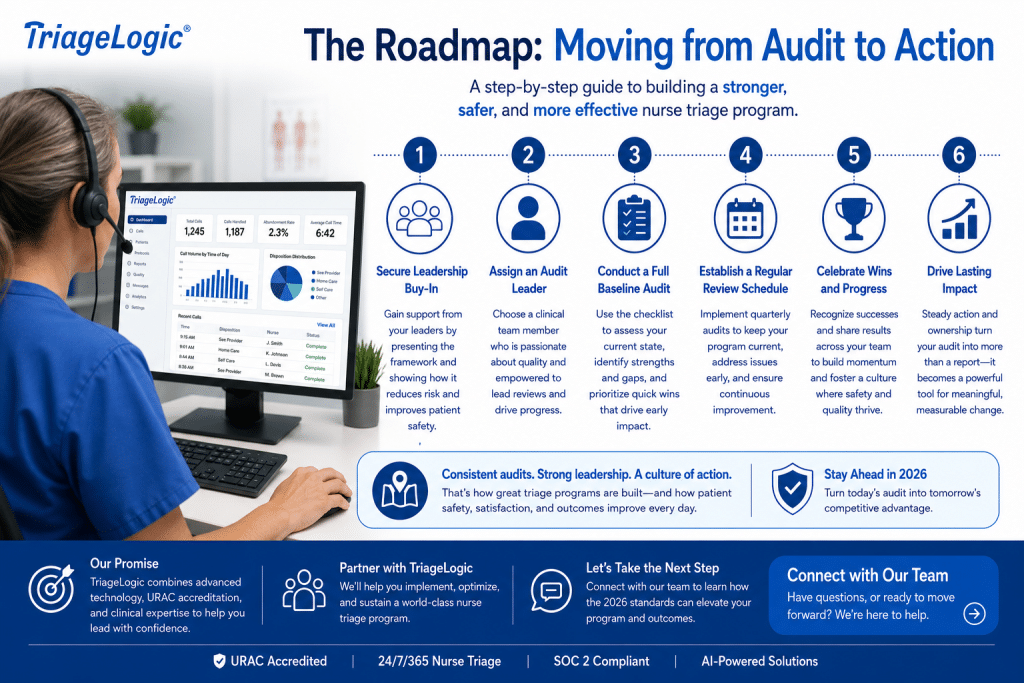
Getting started can feel hard. It doesn’t have to be.
- First, win support from your leaders. Without it, even the best checklist stalls. Present the framework clearly. Show how it lowers risk and improves patient safety.
- Next, pick an audit leader on your clinical team. Choose someone who cares about quality and can run reviews. This person becomes your point of contact for progress.
- Then run a full baseline check with the checklist. Find your strong areas and your gaps. Start with quick wins that show fast impact and build morale.
- Set a regular review schedule. Quarterly audits keep your program current and let you fix issues early.
- Celebrate wins out loud. It builds momentum and a culture where safety matters.
Lasting success comes from steady action and ownership. With focus and teamwork, this audit becomes more than a report. It becomes a tool that drives real change.
Common Audit Pitfalls: Where Most Programs Fail
Documentation gaps. Missing or patchy call records are a common risk. When details go missing, legal exposure grows and your defense weakens. Payers and hospitals need full logs to confirm quality. TriageLogic uses strict records and SOC 2-compliant storage so every call detail is saved and easy to find.
Protocol drift. Over time, even careful nurses can drift from the Schmitt-Thompson protocols under stress. That drift hurts consistency and raises risk. Leaders have to watch for it and keep nurses on track with training and audits. TriageLogic’s MedMessage Automate tools give real-time alerts when a protocol break may be happening.
Misreading URAC. Some teams treat URAC as a one-time step. It isn’t. URAC takes steady work and regular rechecks. In 2026, it has to be part of daily practice. TriageLogic builds accreditation upkeep into its culture, paired with ongoing innovation so clients stay strong.
Conclusion
Today’s triage standards keep your program ahead on quality and efficiency. Staying URAC accredited and holding to the Core 9 points is critical. They protect patient safety and strong operations. Adopt them and you lift patient satisfaction and build trust across the field.
Partner with us to add these elements to your triage program. Secure your lead in 2026. Want ongoing updates? Subscribe to our newsletter.
Connect with Our Team
Have questions, or ready to move forward? Contact our team to learn how the 2026 nurse triage standards can help your program succeed.