


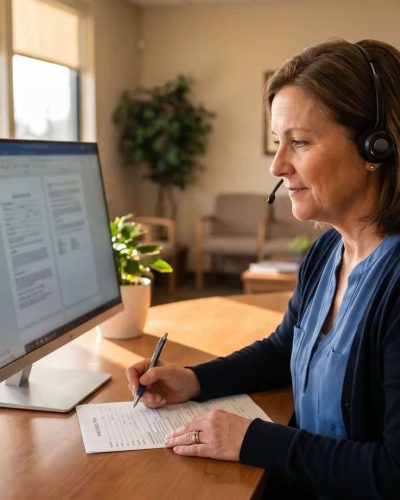


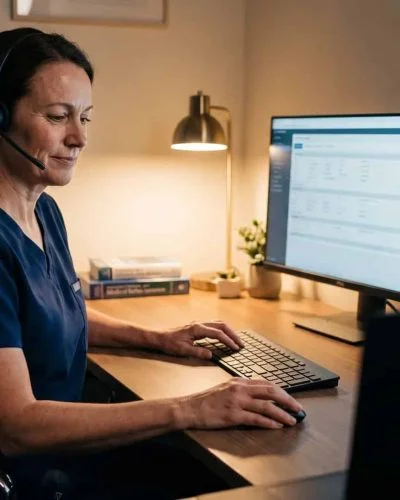

Nurse using dual monitors to review and document patient information during a medical message intake process in a clinical office setting.

Communication Breakdowns Are Still a Major Healthcare Risk: How Medical Message Intake Solves Them

Nurse providing at-home care by checking a patient’s blood pressure, representing nurse triage for hospital-at-home programs.

How Does the Shift to Hospital-at-Home Programs Affect Nurse Triage Services?

A comparison of AI triage and structured nurse-led triage. A digital AI head hovers behind call center nurses who are using triage software for clinical decision support.

As an AI Psychiatric Triage Model Faces Scrutiny, Structured Nurse Triage Still Sets the Standard

A graph of the Rural Healthcare Execution Framework, which includes access, workforce design, measurement, and care navigation.

Rural Health Care Isn’t a Funding Problem—It’s an Execution Problem

An illustrated portrait shows TriageLogic CEO Charu Raheja being interviewed by podcast host Joy Purdy for the Discover the Joy podcast.

From Personal Crisis to Purpose: How Charu Raheja’s Journey Shaped TriageLogic’s Mission

A diverse group of patients uses smartphones and tablets to communicate with a hospital, highlighting digital patient message intake in health care and access to care across different populations.

Patient Message Intake in Health Care: The Hidden Link to Health Inequities

Three telephone triage nurses finding the appropriate level of care for their patients

What Are Triage Levels?

Triage levels indicate the appropriate level of care for each patient depending on the symptoms they are experiencing and their medical history. Determining the appropriate triage level in a quick, effective manor is critical for patient safety, peace of mind, and cost-effective care.

Read More »