
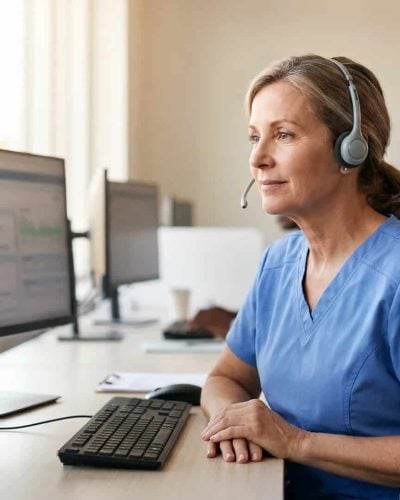





Nurse using dual monitors to review and document patient information during a medical message intake process in a clinical office setting.

Communication Breakdowns Are Still a Major Healthcare Risk: How Medical Message Intake Solves Them

Nurse providing at-home care by checking a patient’s blood pressure, representing nurse triage for hospital-at-home programs.

How Does the Shift to Hospital-at-Home Programs Affect Nurse Triage Services?

A comparison of AI triage and structured nurse-led triage. A digital AI head hovers behind call center nurses who are using triage software for clinical decision support.

As an AI Psychiatric Triage Model Faces Scrutiny, Structured Nurse Triage Still Sets the Standard

A graph of the Rural Healthcare Execution Framework, which includes access, workforce design, measurement, and care navigation.

Rural Health Care Isn’t a Funding Problem—It’s an Execution Problem

An illustrated portrait shows TriageLogic CEO Charu Raheja being interviewed by podcast host Joy Purdy for the Discover the Joy podcast.

From Personal Crisis to Purpose: How Charu Raheja’s Journey Shaped TriageLogic’s Mission

A diverse group of patients uses smartphones and tablets to communicate with a hospital, highlighting digital patient message intake in health care and access to care across different populations.

Patient Message Intake in Health Care: The Hidden Link to Health Inequities

The Top Excuses Men Often Make To Avoid Going To The Doctor And Why Telephone Triage Nurses Can Help

Patients today have more options than ever to receive care outside of their primary care – if they even have one. Having more options may seem like a good thing, however many times the consumer is confused about the best care to address their symptoms. In the process, they end up either over-utilizing services or underestimating serious medical symptoms, creating both a drain to the healthcare system as well as possible threat to their lives.

Read More »